
Women’s/Pelvic Health
Pelvic health physiotherapy in Bathurst
Eliza and Chelcie are currently studying Masters in Physiotherapy (Pelvic Health) through the University of Melbourne. They have also completed APA level 1 and 2 in Pelvic Health and many other professional development courses in Pelvic health and musculoskeletal conditions.

Eliza moved to Orange in 2018 to study Physiotherapy at Charles Sturt University, and has been lucky to call Bathurst home for the past 8 years. Since graduating, Eliza has been building her clinical experience at Bathurst Physiotherapy across musculoskeletal, neurological, paediatric and pelvic health physiotherapy.
Eliza’s own rehabilitation, clinical pilates training and journey into motherhood sparked her passion for pelvic health. Through her own experience of pregnancy and postpartum in a regional setting, she recognised that many women navigate this stage of life with very little education or support. Eliza is passionate about improving access and awareness of pelvic health services within regional communities, with particular interest in birth education, reducing preventable birth trauma and helping women return confidently to the activities they love after childbirth and then supporting women through their menopausal transition.

Chelcie was born and raised in Bathurst and completed her Bachelor of Physiotherapy at Charles Sturt University in Orange before beginning her career at North Canberra Public Hospital, during her 2.5 years in Canberra, Chelcie discovered a passion for Pelvic health physiotherapy. Chelcie joined the Bathurst Physiotherapy team in June 2025.
Chelcie has an interest in Women’s, Men's and Pediatric Pelvic health, including Menopause, pregnancy/post-partum and pre-or-post prostatectomy. She recognises that pelvic health concerns can often feel sensitive or isolating, and she is deeply committed to creating a supportive environment where patients feel understood, empowered, and confident in their care.
Pelvic health physiotherapy is for all genders and ages. It can help you understand, manage and improve symptoms affecting your bladder, bowel and pelvic floor.
At Bathurst Physiotherapy & Sports Injuries Centre, Chelcie and Eliza work with people experiencing a range of pelvic health concerns, including bladder and bowel problems, pelvic pain, pelvic organ prolapse, pregnancy-related changes and pre-post prostatectomy and surgical recovery.
These symptoms are common - but not normal and don't have to be something you simply put up with.
Our approach is individualised, evidence-based and focused on helping you feel confident and comfortable in your body again.
Book a pelvic health physiotherapy appointment with either Eliza or Chelcie:

What is pelvic health physiotherapy?
Pelvic health physiotherapy is a specialized area of physiotherapy, it focuses on the pelvis as a whole and how the muscles, connective tissues, nerves and structures of the pelvis work together.
Your pelvic floor muscles have an important role in bladder and bowel control, sexual function and supporting the pelvic organs. They also work together with your abdominal, back and breathing muscles to help support movement and stability.
Pelvic health physiotherapy isn't simply about doing pelvic floor exercises.
Depending on your symptoms and goals, treatment may involve education, exercise, breathing and relaxation strategies, movement retraining, hands-on treatment, bladder or bowel strategies and other appropriate physiotherapy techniques.
Our Physiotherapists will assess your individual needs and work with you to develop a treatment plan that suits your body, lifestyle and goals.
Do you experience any of these?
You may benefit from seeing a pelvic health physiotherapist if you:
Leak urine when coughing, sneezing, laughing, running or exercising
Feel a sudden or frequent urge to urinate
Have difficulty emptying your bladder or bowel
Experience constipation or difficulty controlling your bowels
Feel heaviness, pressure, dragging or a bulging sensation in the vagina or pelvis
Experience pelvic, abdominal or genital pain
Have pain with sexual activity
Are recovering from a caesarean, vaginal birth or pelvic surgery
Are preparing for pregnancy or planning to return to exercise after having a baby
Have concerns about your pelvic floor strength, coordination or function
Experience pelvic-girdle pain or other pains during your pregnancy
Recovering from a prostatectomy
You don't need to wait until symptoms become severe before seeking help.
What can pelvic health physiotherapy help with?
Bladder and bowel concerns
Pelvic health physiotherapy can assist with problems such as:
Urinary incontinence
Urgency and frequency
Difficulty emptying the bladder
Faecal urgency or incontinence
Constipation
Changes in bladder or bowel function following pregnancy or surgery
Pelvic floor dysfunction
Your pelvic floor muscles can be weak, overactive, painful or poorly coordinated. Physiotherapy can provide individualised assessment to help you understand how your pelvic floor is functioning and develop strategies to improve strength, relaxation and coordination where appropriate.
Pelvic organ prolapse
Pelvic organ prolapse can cause sensations of pressure, heaviness, dragging or bulging in the pelvic or vaginal area.
Physiotherapy can help you understand your symptoms and develop an individualised management and exercise plan.
Pelvic pain
Pelvic pain can be complex and may be related to conditions such as endometriosis, persistent pelvic pain, painful periods or pain with sexual activity.
Our goal is to help you build a practical toolbox of strategies to manage your symptoms. This might include movement and exercise, pelvic floor relaxation, breathing strategies, hands-on treatment, pain education and ways to manage flare-ups.
For persistent or complex pelvic pain, physiotherapy is often one part of the bigger picture. We will work alongside your GP, Gynaecologist or other members of your healthcare team to support you.
Pregnancy and postnatal care
Pregnancy and childbirth can place significant demands on the pelvic floor and surrounding muscles.
Pelvic health physiotherapy can support you during pregnancy and your recovery after birth, including following vaginal birth or caesarean section.
Your physiotherapist can help with:
Pelvic floor concerns
Pregnancy-related pelvic or back pain
Bladder or bowel changes
Preparing for birth
Returning to exercise after birth
Postnatal recovery
Abdominal and pelvic rehabilitation
What happens at a pelvic health physiotherapy appointment?
Your first appointment begins with a conversation about your symptoms, medical history, lifestyle and goals.
Your physiotherapist will collaborate with you to determine what assessment is appropriate. This may include looking at your movement, breathing, abdominal and pelvic muscle function and other areas that may be contributing to your symptoms.
An internal pelvic floor assessment may be recommended in some circumstances, but this is not automatically required. Your physiotherapist will explain what is involved and discuss your options with you before proceeding. An internal pelvic floor assessment can provide valuable information about how the pelvic floor muscles are working. However, it is not the only way we can assesspelvic floor function. If an internal assessment isn’t something you feel comfortable with, we can use other assessment options and work with you to find an approach that feels right for you. If an internal assessment is recommended, your physiotherapist will explain why it may be helpful, talk you through what it involves and answer any questions before you decide whether you would like to proceed.
Your treatment plan will be tailored to you and may include exercises, education, movement retraining, relaxation strategies, hands-on treatment and other physiotherapy techniques.
You will always have the opportunity to ask questions and discuss what you are comfortable with.
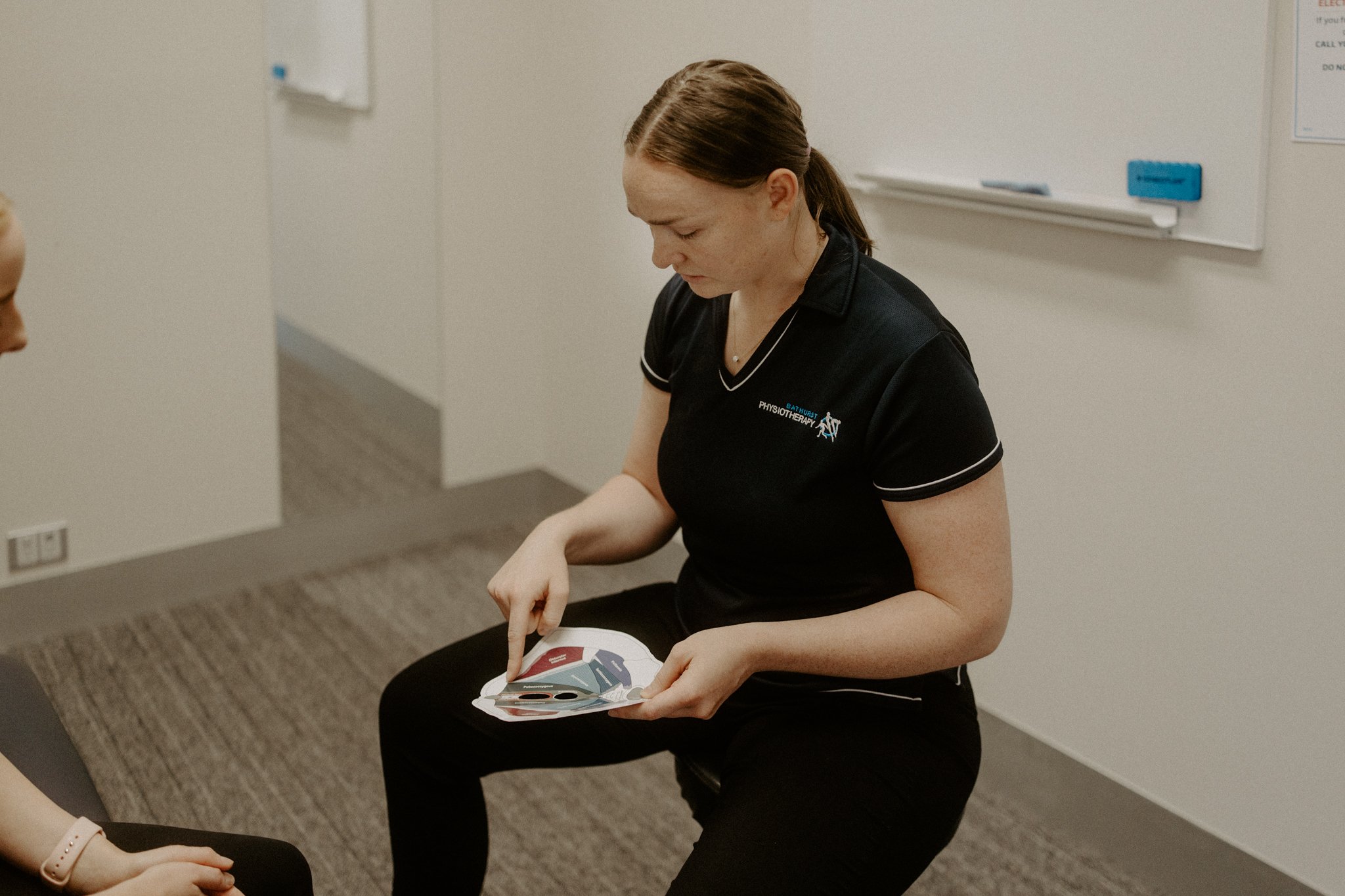
Real-Time Ultrasound Assessment
In some cases, your pelvic health physiotherapist may use real-time ultrasound as part of your assessment and treatment.
Real-time ultrasound allows your physiotherapist to visualise your pelvic floor and abdominal muscles as they work. This can provide useful information about muscle activation, coordination and movement that may not be visible from the outside.
It can also help you better understand what your muscles are doing and provide visual feedback as you learn to activate, relax and coordinate them.
Real-time ultrasound may be useful for:
Assessing pelvic floor muscle function
Assessing abdominal muscle activation
Providing visual feedback during pelvic floor exercises
Understanding muscle coordination and movement
Ultrasound assessment is not required for everyone. Your physiotherapist will determine whether it may be useful based on your symptoms, assessment and goals.
Your body isn't always easy to understand from the outside. Real-time ultrasound can help make what's happening beneath the surface easier to see and understand.
You don't have to "just live with it"
Pelvic health symptoms are common, particularly during pregnancy, after childbirth and throughout different stages of life.
But common doesn't mean you have to accept them as your new normal.
Whether you're experiencing bladder leakage when you exercise, pelvic pain, symptoms of prolapse, changes after having a baby or simply aren't sure whether something you're experiencing is normal, a pelvic health physiotherapist can help you understand what's happening and what you can do about it.
Take the first step towards feeling more confident in your body.
Book a pelvic health physiotherapy appointment with either Eliza or Chelcie:
Frequently Asked Questions
Do I need a referral to see a pelvic health physiotherapist?
No. You do not generally need a doctor's referral to see a physiotherapist privately. If you are attending under a workers compensation, DVA or third-party insurance claim, different requirements may apply.
Do I need an internal pelvic floor assessment?
Not necessarily. Your physiotherapist will determine in collaboration with you what assessment is appropriate based on your symptoms and goals. If this is appropriate, your physiotherapist will explain why and discuss it with you beforehand
Is pelvic floor physiotherapy only for women after having a baby?
No. Pelvic health physiotherapy can help people at different stages of life and genders with a wide range of pelvic health concerns. You do not need to have given birth to benefit from pelvic health physiotherapy.
Is pelvic floor physiotherapy just pelvic floor exercises?
No. Pelvic floor exercises are appropriate for some people, but they aren't the right approach for everyone. Pelvic floor muscles can also be overactive, painful or poorly coordinated. Your treatment should be based on your individual assessment rather than simply being given a generic set of exercises.
When should I see a pelvic health physiotherapist after having a baby?
There isn't one specific timeframe that suits everyone. It is recommended to see a Physiotherapist 6 weeks post-partum to help you understand your recovery and guide your return to normal activities and exercise based on your individual circumstances.
Can pelvic health physiotherapy help with pelvic organ prolapse?
Yes. Physiotherapy can form part of the conservative management of pelvic organ prolapse. Your physiotherapist can assess your symptoms and help develop an appropriate exercise and management plan.
Where can I find pelvic health physiotherapy in Bathurst?
Bathurst Physiotherapy & Sports Injuries Centre provides pelvic health physiotherapy at our clinic at 45 Mitre Street, Bathurst. Our pelvic health services include assessment and management of incontinence, pelvic organ prolapse, pelvic pain, bladder and bowel concerns, pre- and postnatal care and pre- and post-surgical rehabilitation.